


 February 15, 2026
Australia remains one of the most preferred destinations for international students. However, the recent surge in student visa refusals has created anxiety, confusion, and financial stress among applicants.
Many students have reported unexpected rejections despite having confirmed admissions, strong financials, and even offers from top universities. Industry discussions now suggest that the current tightening phase may be temporary, with a major system rationalisation expected by 15 March 2026.
This blog provides a detailed breakdown of the situation, expected changes, practical guidance, and what students should do next.
Table of Contents
- Overview of the Current Situation
- Why Australia Student Visa Refusals Increased
- Understanding the Genuine Student (GS) Requirement
- Impact on Top Universities (Including Group of Eight)
- Industry Meeting Insights – What Was Discussed
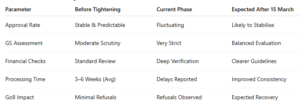
- What Is Expected to Change by 15 March 2026
- Visa Refusal Trends: Before vs Current Phase
- Who Is Most Affected?
- What Students Should Do Now
- How to Strengthen Your Application
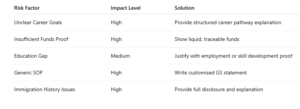
- Key Risk Factors Causing Refusals
- FAQs
- Final Conclusion
1. Overview of the Current Situation
Over the past few months, Australia student visa processing has become significantly stricter. Students from various countries have experienced:
- Sudden visa refusals
- Increased document scrutiny
- Delayed processing timelines
- Additional financial verification checks
- Strong evaluation under the Genuine Student framework
Even applicants with strong academic backgrounds have faced challenges.
This situation has caused widespread stress, especially among students whose classes are about to commence.
2. Why Australia Student Visa Refusals Increased
The rise in refusals is largely linked to migration control measures and risk-based assessment systems. The Australian government has been aiming to balance:
- Migration intake
- Education sector growth
- Integrity of student visa programs
Authorities implemented tighter screening mechanisms to identify non-genuine applicants. However, this stricter filtering appears to have impacted some genuine students as well.
3. Understanding the Genuine Student (GS) Requirement
The Genuine Student (GS) requirement replaced the older GTE (Genuine Temporary Entrant) framework. Under GS, immigration officers assess:
- Academic background
- Career relevance of chosen course
- Financial stability
- Immigration history
- Future plans after study
Applications lacking clarity in career progression or containing generic statements are facing higher refusal rates.
This means documentation quality now matters more than ever.
4. Impact on Top Universities – Including Group of Eight
One surprising development is that students admitted to prestigious institutions were also affected.
The Group of Eight — Australia’s leading research-intensive universities — have also seen student visa refusals during this phase.
These universities include:
- University of Melbourne
- Australian National University
- University of Sydney
- University of Queensland
- Monash University
- University of Western Australia
- University of Adelaide
- University of New South Wales
When even applicants from these universities faced refusals, it became clear that the tightening was systemic rather than institution-specific.
5. Industry Meeting Insights – What Was Discussed
A recent industry-level meeting attended by senior education and migration stakeholders revealed key insights:
- The refusal spike is linked to over-correction in migration allocation.
- Assessment filters became excessively strict.
- Genuine applications were unintentionally impacted.
- Authorities are reviewing the consistency of decisions.
Most importantly, discussions indicated that the visa assessment system may be fully rationalised by 15 March 2026.
6. What Is Expected to Change by 15 March 2026?
If the expected rationalisation occurs, the following improvements may happen:
- Balanced Genuine Student assessments
- Reduced over-rejection
- Improved case officer consistency
- Clearer financial documentation guidelines
- Better allocation management instead of strict volume reduction
This could lead to a noticeable improvement in visa approval rates for genuine students.
7. Visa Trends Comparison: Before vs Current Phase
8. Who Is Most Affected?
The following categories have seen higher scrutiny:
- Applicants changing academic streams without justification
- Students with large education gaps
- Applications with weak financial documentation
- Generic SOP submissions
- High-risk profile applicants
Strong cases with well-structured documentation continue to receive approvals.
9. What Students Should Do Now
If Your Visa Was Refused:
- Carefully analyse refusal reasons
- Address GS-related concerns
- Strengthen career justification
- Improve financial evidence clarity
- Avoid immediate reapplication without correction
If Your Application Is Pending:
- Stay patient
- Keep funds traceable and accessible
- Be ready for additional documentation requests
- Maintain communication with your education provider
10. How to Strengthen Your Australia Student Visa Application
To improve approval chances:
- Write a personalised Genuine Student statement
- Clearly explain course relevance to career
- Provide transparent and verifiable financial documents
- Show academic consistency
- Avoid incomplete documentation
- Demonstrate long-term career goals aligned with your home country
Quality, clarity, and consistency are now critical success factors.
11. Key Risk Factors Causing Refusals
Frequently Asked Questions (FAQs)
Why are Australia student visa refusals high in 2026?
Due to tighter migration controls and strict Genuine Student assessment.
Is the visa system really changing by 15 March 2026?
Industry discussions suggest rationalisation is expected, but official confirmation is pending.
Will approval rates increase?
If the system stabilises as expected, approval rates for genuine students are likely to improve.
Are top universities like Go8 affected?
Yes, even Go8 applicants experienced refusals during the tightening phase.
Should I defer my intake?
It depends on your situation. Seek professional advice before deciding.
Can I reapply after refusal?
Yes, but only after correcting the reasons mentioned in your refusal letter.
Final Conclusion
The recent spike in Australia student visa refusals has created understandable stress among international students. However, industry insights suggest this is a temporary tightening phase rather than a permanent shutdown.
If the system is rationalised by 15 March 2026 as expected:
- Approval rates may improve
- Decision-making may become more consistent
- Genuine students may face fewer unnecessary refusals
Until then, the best strategy is preparation, documentation strength, and clear career alignment.
A strong application remains the most powerful factor in securing your Australia student visa approval in 2026.