



 March 9, 2026
New Zealand has become one of the most attractive study destinations for international students. Not only does the country offer world-class universities, but it also provides a clear and transparent pathway from study to permanent residency (PR).
Unlike many countries where immigration pathways are complex, New Zealand has introduced structured immigration programs that clearly explain how students can move from education to employment and eventually permanent residency.
Therefore, students who plan to study in New Zealand can strategically select courses that align with the country’s skill shortages and immigration priorities.
For official immigration details, students should always refer to the New Zealand Immigration website:
https://www.immigration.govt.nz
Table of Contents
- Why Study in New Zealand
- Study to Immigration Pathway Explained
- Green List Occupations in New Zealand
- Skilled Employer-Based Migration
- Amber List Career Pathways
- Caregiver and Healthcare Pathways
- Trade and Technician Courses
- Study Options After 12th and Master’s
- Cost of Studying in New Zealand
- Post-Study Work Opportunities
- Step-by-Step Process to Study in New Zealand
- Study in New Zealand Facts
- FAQs
Why Study in New Zealand
New Zealand offers high-quality education, global career opportunities, and excellent lifestyle benefits. Additionally, the country is known for its safe environment and welcoming international student community.Key Benefits of Studying in New Zealand
- Globally recognized universities
- Safe and student-friendly environment
- Strong post-study work opportunities
- Transparent immigration policies
- High demand for skilled professionals
- Opportunity to gain permanent residency
Because of these advantages, many students now prefer to study in New Zealand instead of traditional destinations.
Study to Immigration Pathway Explained
One of the strongest reasons students choose New Zealand is the clear study-to-immigration pathway.
The government has introduced structured immigration systems that help international graduates transition into the workforce and eventually apply for permanent residency.
Pathway Overview
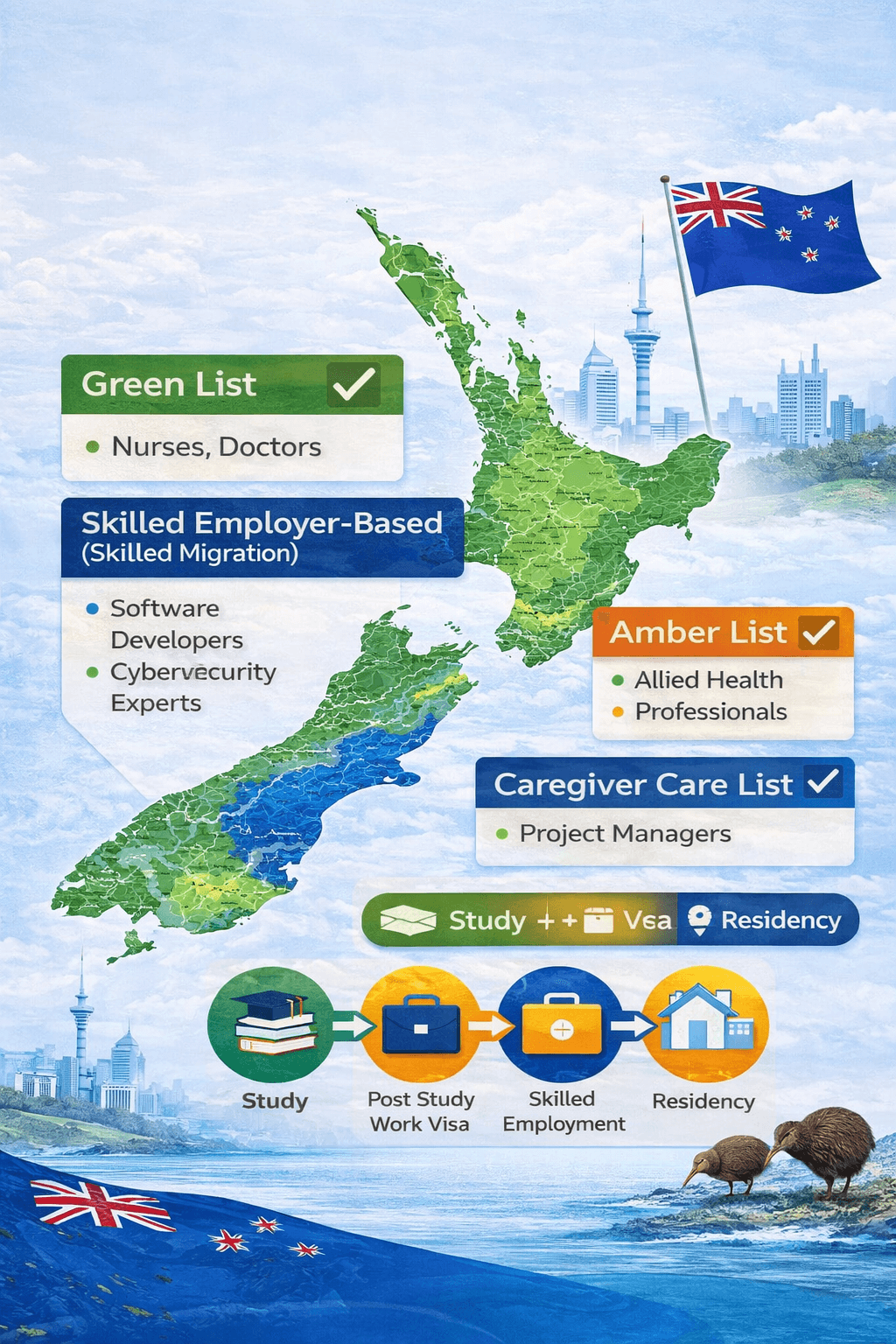
Study Program → Post Study Work Visa → Skilled Employment → Residency Application
This clear roadmap helps students plan their future even before starting their studies.
Green List Occupations in New Zealand
The Green List is a list of occupations that are in high demand in New Zealand. Students who choose courses related to these professions have a stronger chance of obtaining residency.
Examples of Green List Jobs
| Sector | Occupations |
| Healthcare | Nurses, Doctors |
| Engineering | Civil Engineers, Structural Engineers |
| IT | Software Developers, Cybersecurity Experts |
| Construction | Project Managers |
| Education | Teachers |
Because these professions face skill shortages, the government provides faster immigration pathways.
Skilled Employer-Based Migration
Another major pathway is Skilled Employer-Based Migration. In this system, international graduates who secure jobs with approved employers can apply for skilled visas.
Requirements
- Job offer from an accredited employer
- Relevant qualification
- Required salary threshold
- Work experience
Therefore, choosing the right course significantly increases the chances of securing employment.
Amber List Career Pathways
The Amber List includes professions that are also in demand but require some work experience before applying for residency.
Examples
| Industry | Roles |
| Technology | IT Specialists |
| Infrastructure | Construction Managers |
| Healthcare | Allied Health Professionals |
Students who work in these roles for a certain period can later apply for permanent residency.
Caregiver and Healthcare Pathways
Healthcare and caregiving professions are extremely important in New Zealand. As a result, these sectors provide special immigration opportunities.
Popular Programs
- Nursing
- Healthcare Assistance
- Aged Care Support
- Medical Technology
Because of the growing demand for healthcare workers, graduates often receive excellent employment opportunities.
Trade and Technician Courses
Trade and technician programs are also highly valued in New Zealand.
Popular Trade Courses
| Course | Career Path |
| Automotive Engineering | Vehicle Technician |
| Electrical Technology | Electrician |
| Construction Technology | Building Technician |
| Plumbing | Plumbing Specialist |
These careers are included in skill shortage categories, making them attractive options for students.
Study Options After 12th and Master’s
Study Options After 12th (Plus Two)
Students who complete 12th grade (Plus 2) can choose various diploma and bachelor programs.
Popular Options
- Diploma in Engineering
- Bachelor of Information Technology
- Bachelor of Nursing
- Hospitality Management
- Construction Management
These programs can lead to strong career and immigration opportunities.
Master’s Programs in New Zealand
Master’s degrees are particularly popular among international students.
Advantages of Master’s Programs
- Shorter duration (1–2 years)
- Strong employment opportunities
- Higher salary potential
- Better immigration pathways
Consequently, many students prefer pursuing Master’s degrees in New Zealand.
Cost of Studying in New Zealand
Before planning to study in New Zealand, students should understand the financial requirements.
Average Tuition Fees
| Program | Annual Cost |
| Diploma | NZD 12,000 – 18,000 |
| Bachelor’s Degree | NZD 20,000 – 30,000 |
| Master’s Degree | NZD 25,000 – 40,000 |
Living Expenses
Students typically require NZD 15,000–20,000 per year for accommodation, food, and transportation.
Post-Study Work Opportunities
New Zealand offers a Post-Study Work Visa, which allows international graduates to stay and work after completing their degree.
Work Visa Duration
| Qualification | Work Visa Duration |
| Bachelor’s Degree | Up to 3 years |
| Master’s Degree | Up to 3 years |
| Doctorate | Up to 3 years |
This opportunity allows graduates to gain work experience and eventually apply for residency.
Step-by-Step Process to Study in New Zealand
Students planning international education should follow a structured process.
Application Process
- Choose a course and institution
- Prepare academic documents
- Submit university applications
- Receive an offer letter
- Apply for student visa
- Arrange accommodation and travel
- Begin studies in New Zealand
Study in New Zealand Facts
Important Facts
- New Zealand has 8 globally recognized universities
- International students can work 20 hours per week
- Graduates can receive up to 3 years of work visa
- Many programs align with Green List occupations
- The country is ranked among the safest study destinations
FAQs
1. Why should students study in New Zealand?
Students should study in New Zealand because it offers high-quality education, strong job opportunities, and clear immigration pathways.
2. What is the Green List in New Zealand?
The Green List includes occupations that are in high demand, offering faster residency opportunities.
3. Can international students get PR in New Zealand?
Yes. After completing studies and gaining relevant work experience, students may apply for permanent residency.
4. Can students work while studying in New Zealand?
Yes. International students can work up to 20 hours per week during studies.
5. Is New Zealand good for IT and healthcare courses?
Yes. IT, engineering, nursing, and healthcare programs offer excellent career prospects.